Sestri Levante old town sits on the narrow strip of land between its two bays, a car-free maze of carruggi (narrow Ligurian lanes) paved in slate. You can cross it in about 12 minutes without stopping, but most people need an hour or two, because they never stop stopping.
Sestri Levante old town in brief
In the morning, before the shops open, you can hear your own footsteps in the old town. The slate paving is still damp from being washed, a baker's door is open and the smell of focaccia reaches the corner before you do. An hour later the same lane is full of people with beach bags. Both versions are worth seeing.
Sestri Levante old town is built on the strip of land that joins the town to its promontory, with the sea on both sides:
- Location: between the Baia del Silenzio (east) and the Baia delle Favole (west).
- Size: you can walk the main street in about 12 minutes without stopping, 20 if you stop at the shop windows.
- Main street: Via XXV Aprile, the pedestrian spine of the old town.
- Main square: Piazza Matteotti, where the town meets in the evening.
- Churches: Santa Maria di Nazareth and the Romanesque San Nicolò dell'Isola.
- Cars: the centre is pedestrian. Leave the car outside and walk.
A word you will hear a lot: carruggi. It is the Ligurian name for the narrow lanes between tall houses that you find in every old town on this coast.
How to get to the old town
The old town is a short walk from everywhere in Sestri. The only thing that does not get you there is a car, because the centre is closed to traffic.
By train
Sestri Levante station is on the Genoa to La Spezia line, served by frequent regional trains. From the station to the old town it is about 10 minutes on foot towards the sea. If you are planning the whole trip by rail, see our guide to Sestri Levante without a car.
By car
Leave the A12 motorway at the Sestri Levante exit, about 5 minutes from the centre. Park in a paid car park, such as the Mandela car park, or in the blue-line bays near the station (blue lines mean paid parking in Italy; white lines are usually free, yellow are reserved). In summer, spaces go fast after about 9 a.m. Our page on parking in Sestri Levante has the details. Watch out for ZTL signs (limited traffic zones): driving past one without a permit can mean a fine in the post, months later. Current traffic rules are published by the Comune di Sestri Levante.
By bus
Local ATP Tigullio buses link Sestri with Lavagna, Chiavari and the nearby towns.
One practical tip: the paving is made of ciappe, smooth slabs of grey Ligurian slate. When it rains they become as slippery as glass. Wear shoes with a decent sole. Heels and flip-flops do not mix well with wet slate.
A walking route through the carruggi
Here is the loop I suggest to guests. It takes about two hours with stops.
- Piazza Matteotti. Start in the main square, the town's living room, with pastel buildings and café tables. In summer it hosts concerts and festivals.
- Basilica di Santa Maria di Nazareth. The main church of the old town, built in the 17th century, with a Baroque interior. Opening hours vary, so check at the door.
- Via XXV Aprile. The pedestrian street that runs through the old town. Food shops, bakeries, small boutiques. Early in the morning you may see fresh fish laid out on ice.
- The side lanes. Step off the main street into the carruggi. Laundry hangs between the windows, cats sleep on doorsteps and the sun only reaches the ground for a few hours a day.
- San Nicolò dell'Isola. Climb towards the promontory to this Romanesque church from the 12th century, one of the oldest buildings in town. Plain inside. You go for the setting and the sea around it.
- Down to the Baia del Silenzio. End on the sand of the smaller bay. You can read more about it in our guide to the Baia del Silenzio.
A note on Italian opening hours: many small shops close for a long lunch break, often from about 1 p.m. to 3.30 or 4 p.m., and reopen until the evening. The old town is liveliest in the morning and again after five. If you want the history behind the churches, our Italian article on the churches of Sestri Levante (in Italian) goes into the details.
From the old town to both bays in five minutes
This is what makes Sestri different. You walk down a lane in the old town and the sea appears at the end of it. Walk the other way and there is sea again. Changing beach takes five minutes.
Baia del Silenzio
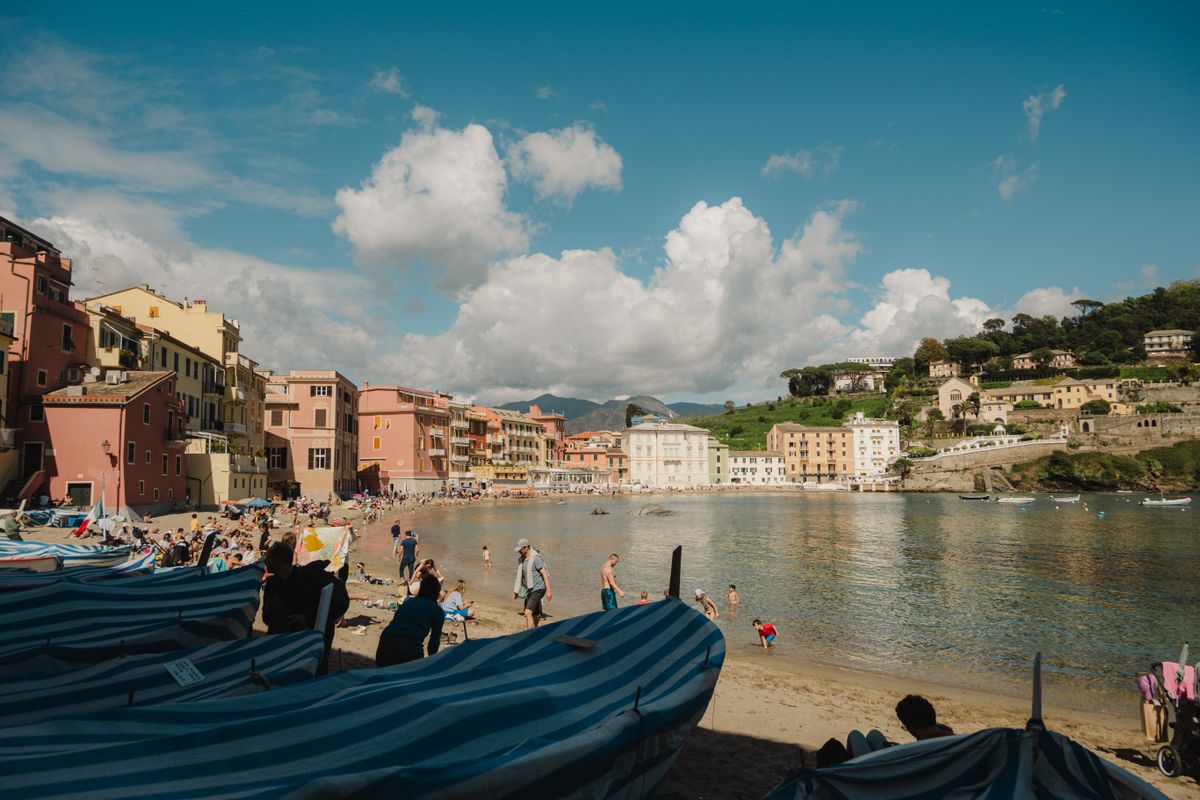
The smaller bay, on the east side. Fine sand, a seabed that slopes gently, sheltered water. In August it is full from 9 in the morning. In May or June at seven in the evening it is almost empty.
Baia delle Favole
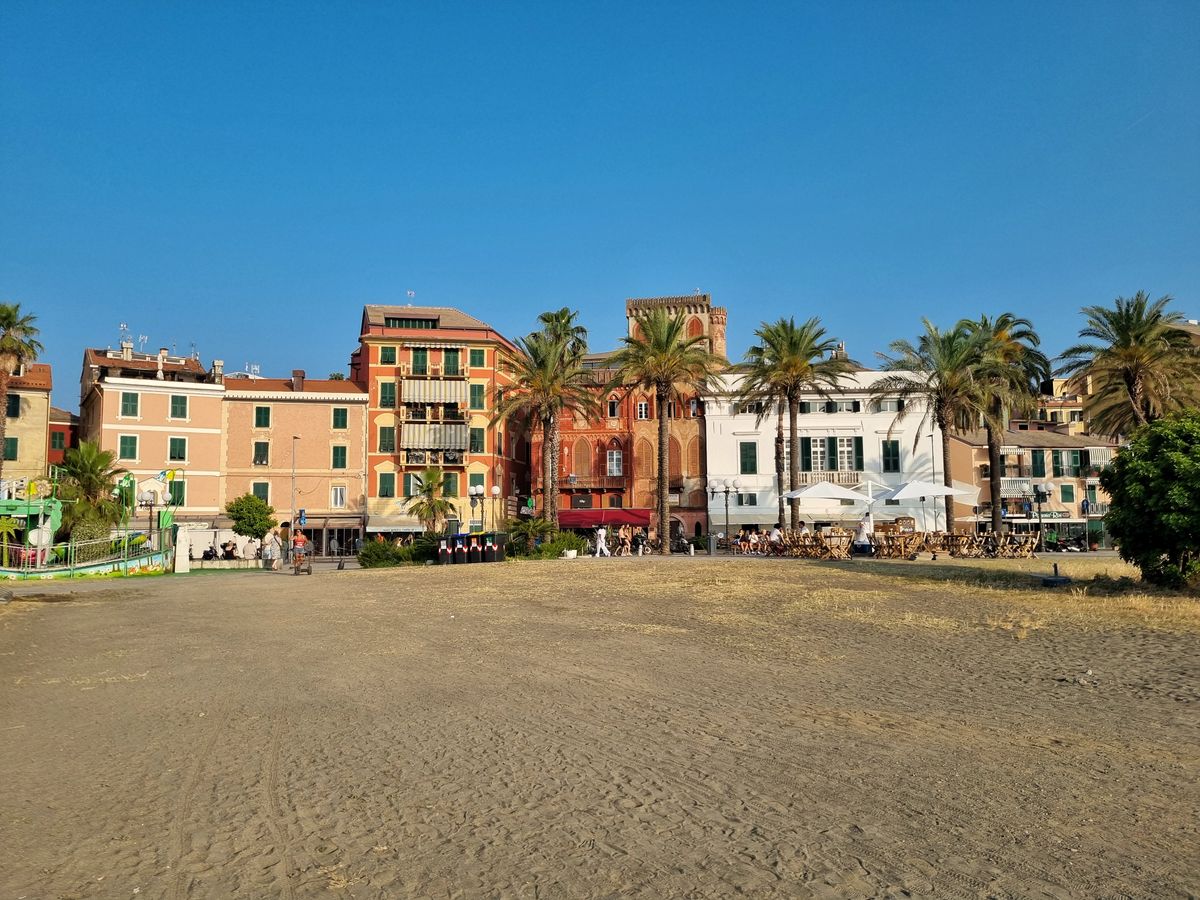
The bigger bay, on the west side, about a kilometre long. It has beach clubs (stabilimenti, where you rent a sunbed and umbrella) as well as stretches of free beach. It is more open and has more services, which makes it easier with small children. Its name, the "Bay of Fables", is linked to Hans Christian Andersen and the Andersen Prize, created in Sestri in 1967.
My suggestion if you have a whole day: morning at the Baia delle Favole, lunch in the carruggi, afternoon at the Baia del Silenzio until sunset. For access, beach clubs and free beaches, see our full guide to Sestri Levante's beaches.
What to eat in the carruggi
The old town is where people from Sestri buy their bread, and you can tell. Between the lanes you will find:
- Focaccia bakeries. Genoese focaccia, soft, salty and shiny with olive oil, sold by the slice and eaten standing up. The good one has an uneven surface, with dimples full of oil.
- Delis. Fresh pesto, salted anchovies, local olive oil. Good things to take home.
- Rosticcerie. Takeaway shops selling vegetable pies, stuffed vegetables and other ready dishes. A quick lunch without sitting down.
My rule: skip anywhere with laminated photos of the food in the window. Good focaccia does not need a photo. If you see locals queuing at a bakery at 11 in the morning, that is the place.
Remember that Italians eat late. Lunch runs from about half past twelve, dinner rarely starts before half past seven, and many kitchens close between the two. Mid-afternoon, focaccia and gelato are your friends.
From island to isthmus: how the old town took shape
The promontory of Sestri Levante was once an island. Over time, sediment carried down to the coast filled the stretch of sea between it and the mainland, creating the narrow strip of land that today separates the two bays. That geography explains everything about the old town: it is long, narrow, squeezed between two shores, with lanes running straight down to the water.
The layout of the carruggi still follows the medieval street plan. The houses are tall and close together, which keeps the lanes in shade even in the middle of a July afternoon. That is not an accident: on this coast, shade was a building material.
The town grew as a harbour for the Republic of Genoa, and its churches date from different centuries, from the Romanesque San Nicolò to the 17th-century Santa Maria di Nazareth. For the full story, from Genoa to the arrival of tourism, read the history of Sestri Levante (in Italian).
Staying close to the old town
If you have only one day, concentrate on Via XXV Aprile, Piazza Matteotti and the Baia del Silenzio. Our plan for one day in Sestri Levante puts them in the right order. If you have more time, let the old town slow you down: go into the churches, sit in a bar without a sea view, come back after dinner when the square fills up again.
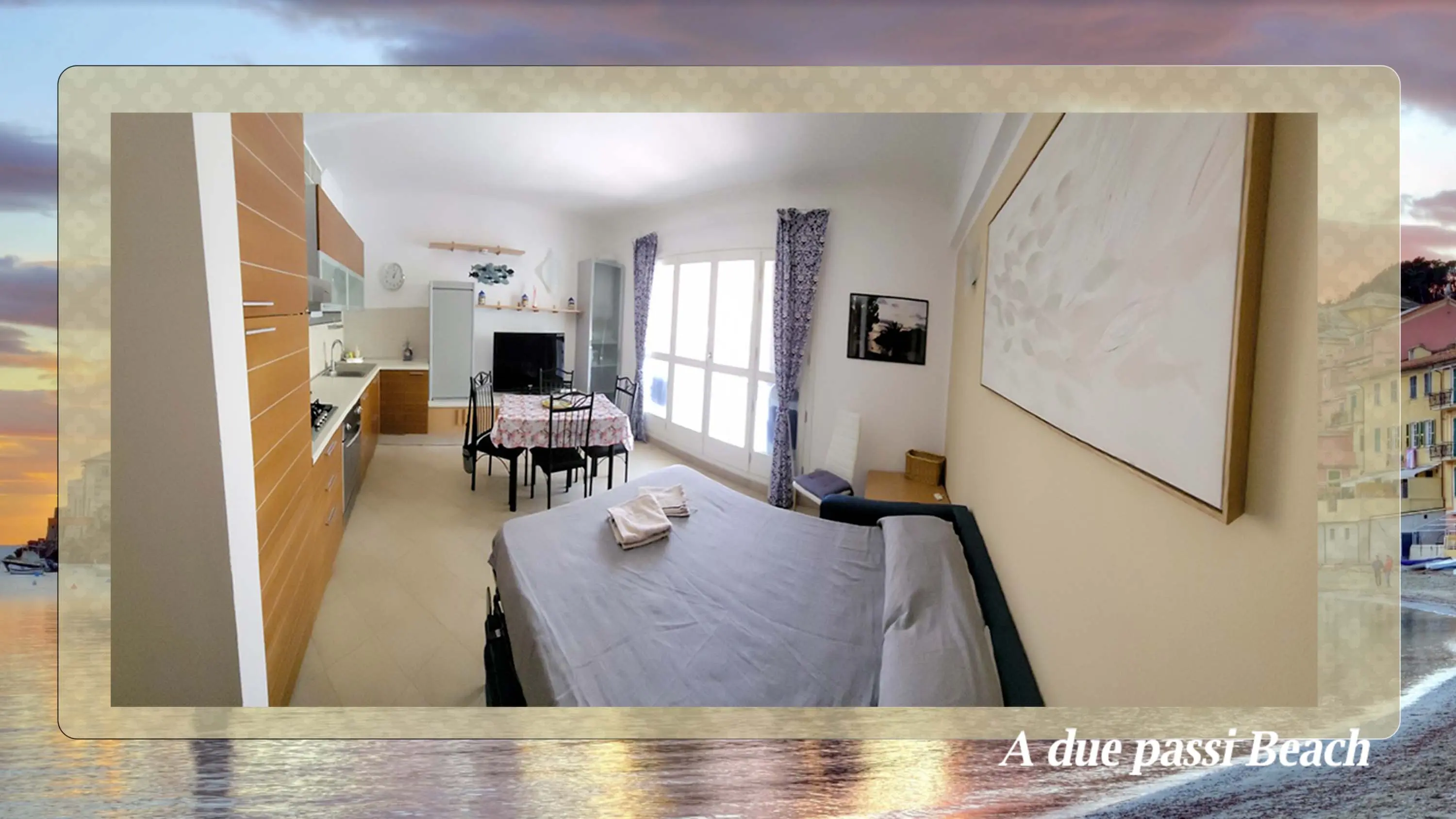
Sleeping within walking distance changes the trip. You go back for a shower after the beach and come out again in the evening without thinking about parking. Both our holiday apartments in Sestri Levante are within walking distance of the sea: Due Passi dal Mare is 2 minutes from the sea and 2 from the station, and Due Passi Beach is 5 minutes from the sea with private parking.
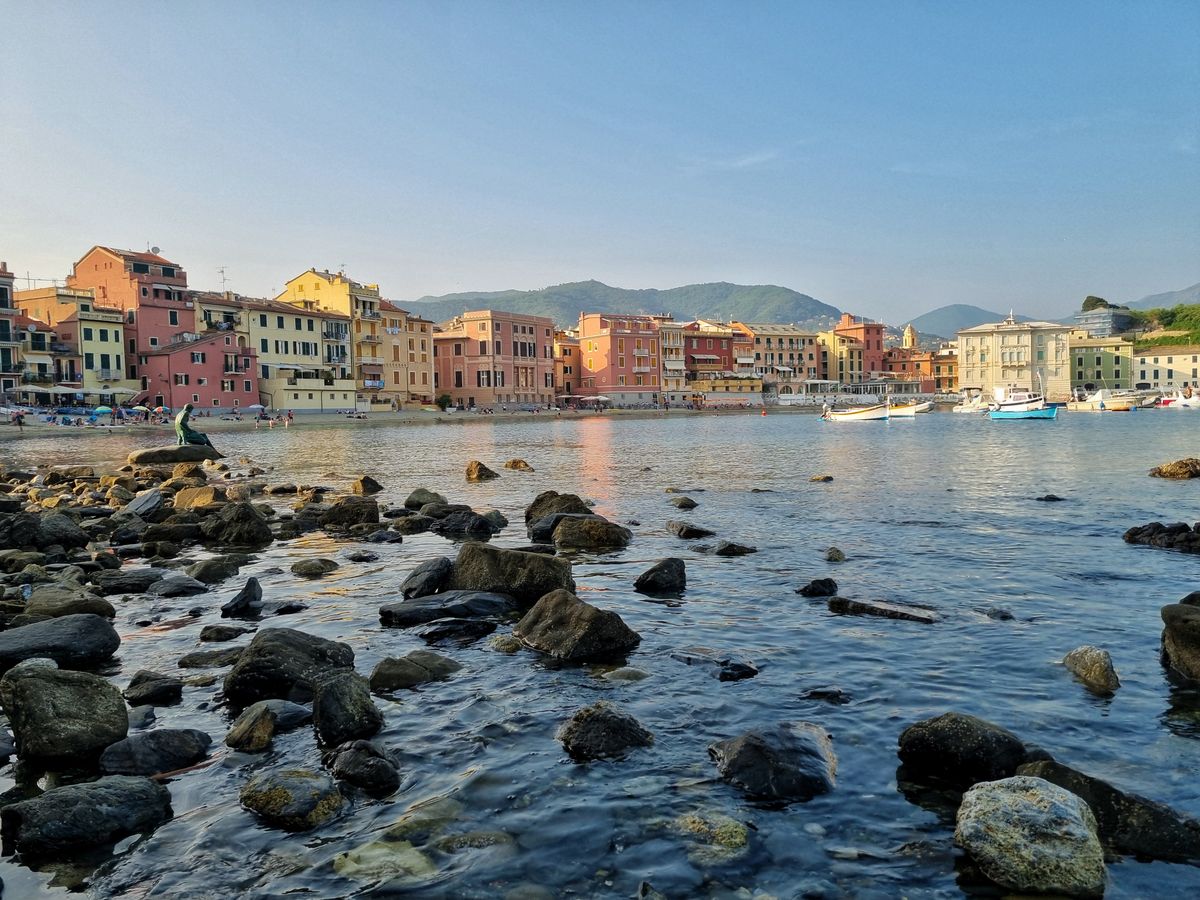
One last detail: after sunset, walk to the end of the Baia del Silenzio and look back. The lights of the old town come on one by one, reflected in water that, on a calm evening, barely moves.
Frequently asked questions
How long does it take to see Sestri Levante old town?
You can cross it in about 12 minutes without stopping. Allow one to two hours to explore the side lanes, the churches and the shops, and longer if you stop for a coffee in Piazza Matteotti.
Can you drive into Sestri Levante old town?
No, the centre is pedestrian and access is restricted. Park in a paid car park such as Mandela or in the blue-line bays near the station, then walk. Watch for ZTL signs to avoid fines.
How far is the old town from Sestri Levante station?
About 10 minutes on foot, heading towards the sea. You do not need a car or a bus to reach it.
What are carruggi?
Carruggi is the Ligurian word for the narrow lanes between tall houses found in the old towns of this coast. In Sestri Levante they are paved with slate slabs called ciappe, which can be slippery when wet.
Is Sestri Levante old town good for families with children?
Yes. It is car-free, compact and close to both beaches. Pushchairs are fine on the main street and the seafront, less so in the steeper side lanes with steps.

📅 Last updated: